Why we charge the same whether they are in Kingston or Buenos Aires
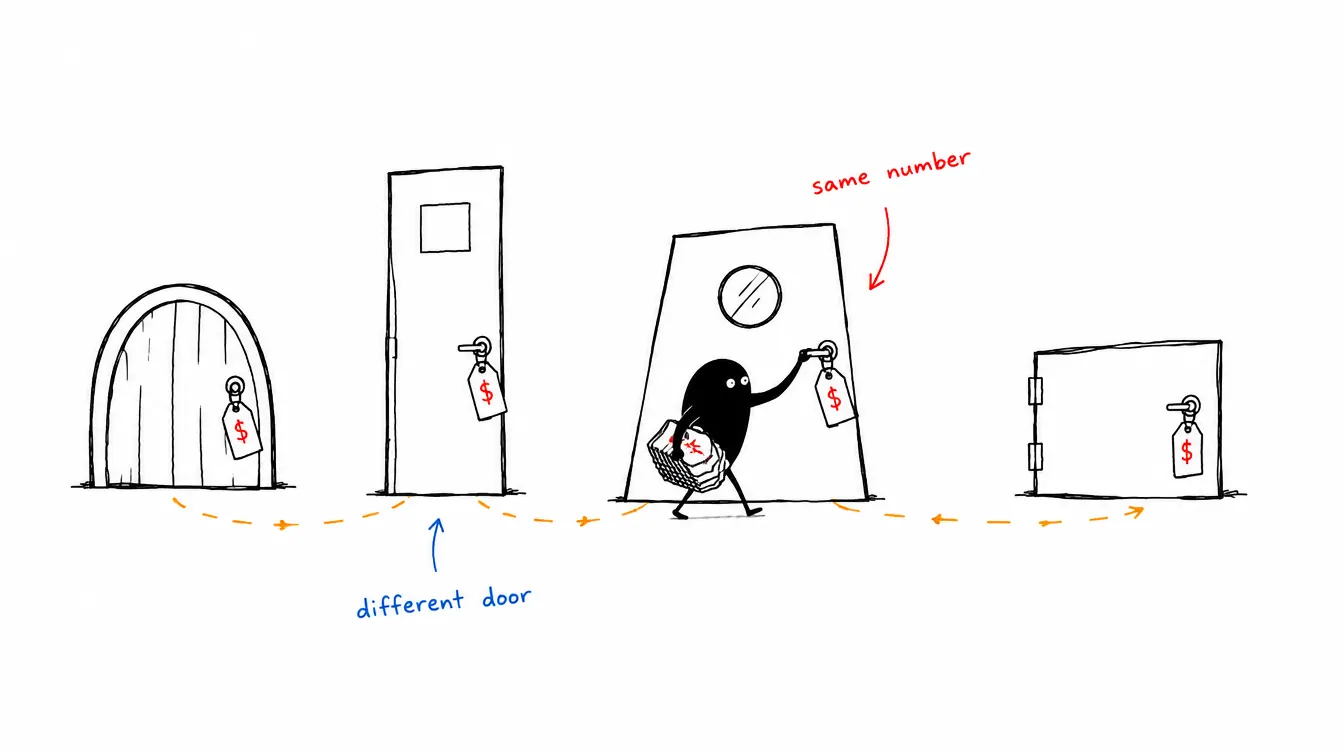
We charge the same monthly rate for a role whether the person is in Kingston (Jamaica), Bogota (Colombia) or Buenos Aires (Argentina). Clients ask about this more than almost anything else, usually in the form of a reasonable question: if it costs you less there, why am I not paying less?
The obvious model
The obvious model is to price by country. Local costs differ, sometimes by a lot, so you pass the difference through and quote a different number per market. Most of the industry does this. It is easy to explain, it looks fair, and the first version of our own rate card worked that way.
It has one problem, and that problem is what happens to the shortlist.
What it does to a shortlist
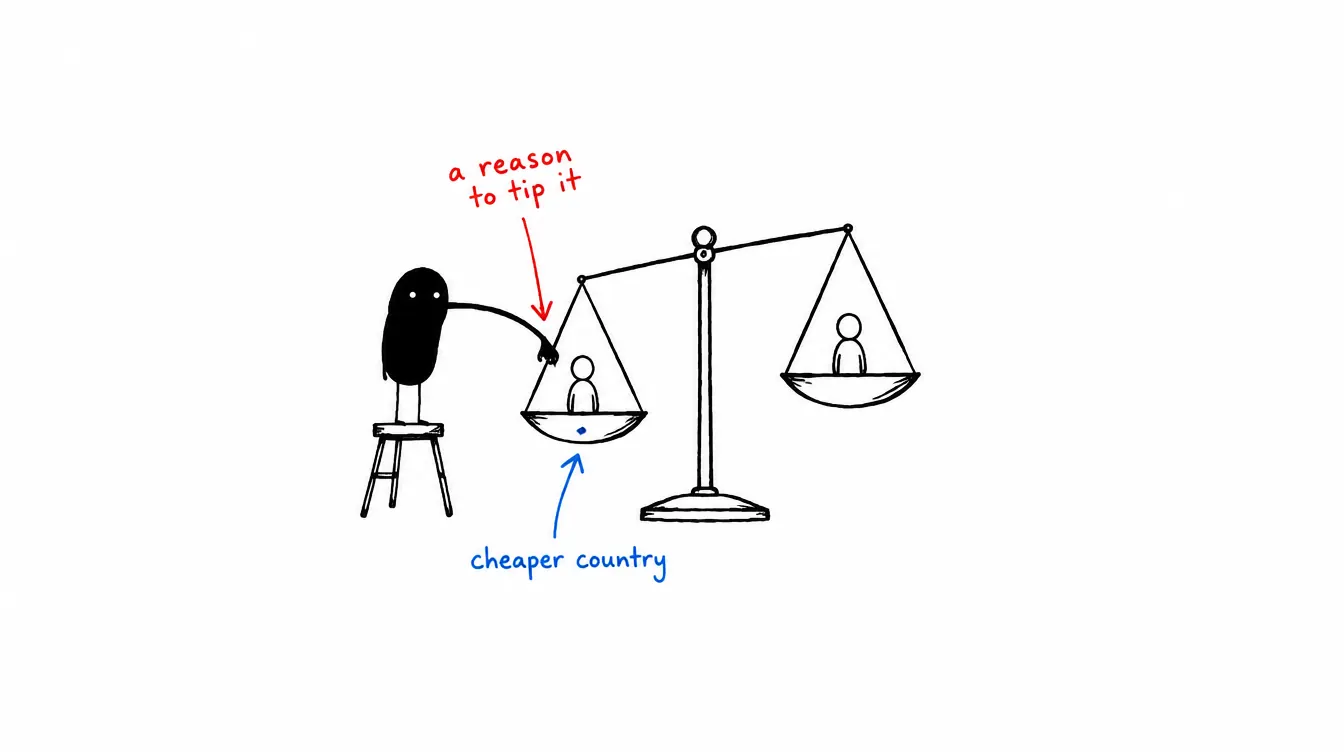
Suppose we price by country and our margin is a percentage of the rate. Now every shortlist we build has a quiet second criterion attached to it. Two candidates, equally strong, one in a market where we make more. Nobody has to be dishonest for that to bend the result over a few hundred placements. It bends through which profiles get surfaced first, which get a second look, which get described warmly.
We did not want to have to be vigilant about that. The cleanest way to stop optimizing for something is to stop being paid for it.
So the rate is fixed per role and level and does not move with the country. The consequence is that when we put three people in front of you, the only thing we have been optimizing for is which of them is right for your role. You do not have to take our word for it, because there is no longer a version of the story where we benefit from the other answer.
Who absorbs the difference
The difference does not disappear. We absorb it.
A specialist in a higher-cost market is paid more, and we take less margin on that placement. A specialist in a lower-cost market is paid the local-competitive figure and the margin is wider. Across a bench it averages out, and the averaging is our problem rather than something you have to think about when you read a shortlist.
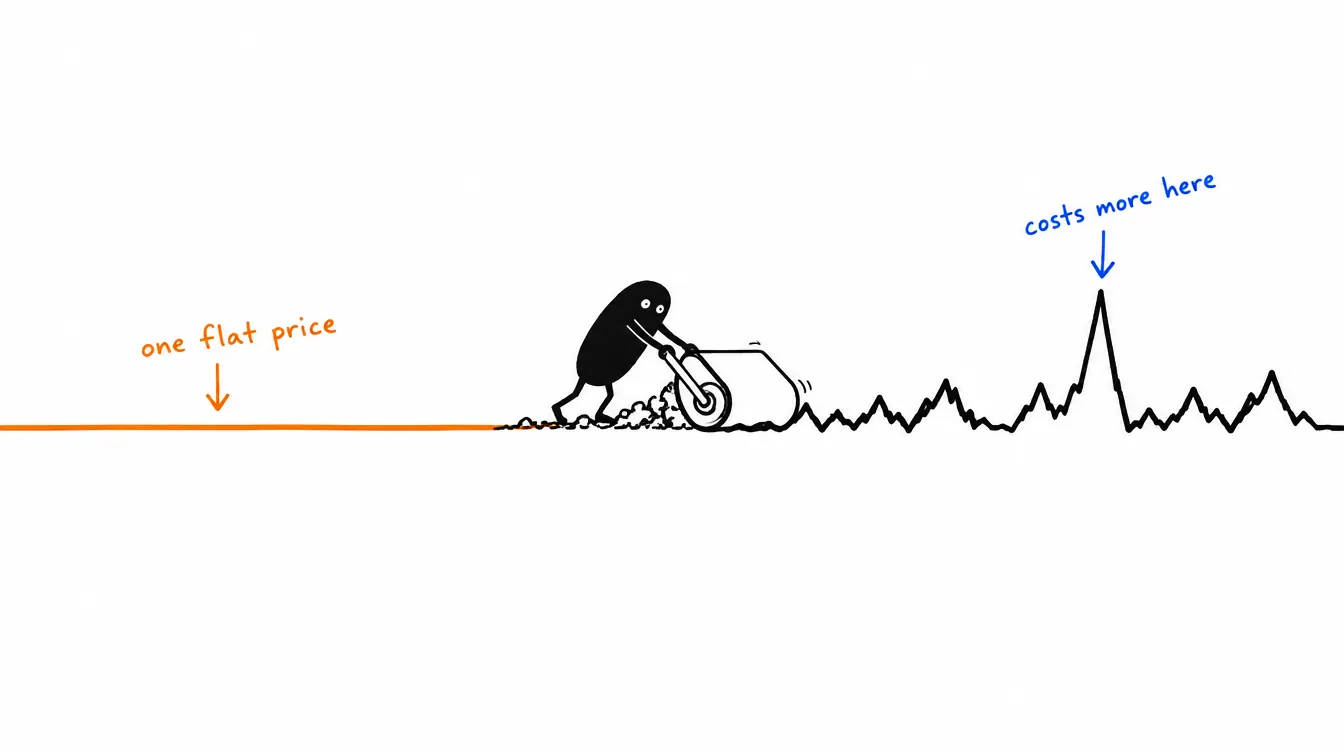
It also means we never have a conversation with a client that goes "we could get this cheaper if you were open to a different country." That conversation is bad for the specialist, who becomes a cost line, and bad for the client, who ends up making a hiring decision on a variable that has nothing to do with the work.
The trade we are making
This model is worse for us in two specific situations, and it is only fair to name them.
If you only ever want to hire from the lowest-cost market we recruit in, you are paying slightly more than a country-priced vendor would charge. You are buying something for that: a shortlist that was not filtered by our margin, and a rate that will not move if the person relocates. Some buyers do not value that, and they are better off elsewhere.
And if a market we recruit in gets more expensive faster than we expected, we wear it until the annual review rather than repricing you mid-placement. That has happened. It is survivable, and it is the cost of the promise.
The published rates for every role and level are on the rates page, and everything behind the numbers is on where our numbers come from.